Writing counts for as much as the image in my work.
Almost every project I take on has a written component, and I approach it as a fashion historian would: going through a brand's past, its archives, its gestures and its identity, then drawing out narratives that hold, and that give a campaign the depth a product promise never reaches on its own. My standards for language were set in the editorial teams I ran; my standards for analysis came from five years spent reading an industry's signals and turning them into written arguments.
Articles
I write for the press and publish my own work, a practice that began at Modelab, the fashion innovation review I co-founded and edited, and carried on at A Magazine Curated By. Five years leading the fashion team at Heuritech gave me an appetite for analysis and for arguments built on signals you can verify. But the historian's instinct is what governs: setting a garment, an image or a practice within a longer span than a single season.
Le scandale sans la pensée, magazine magazine, no. 26, AW 26/27
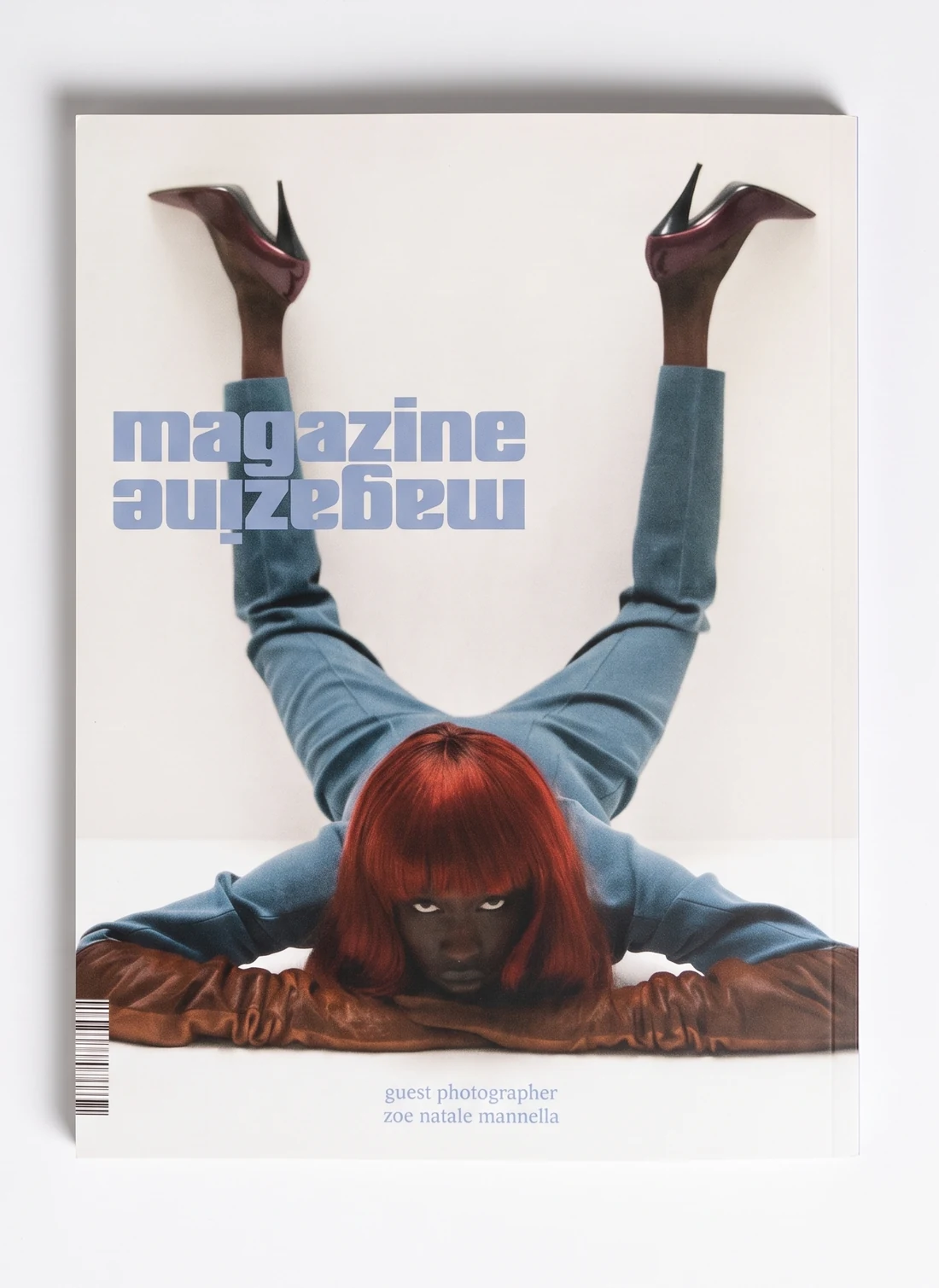
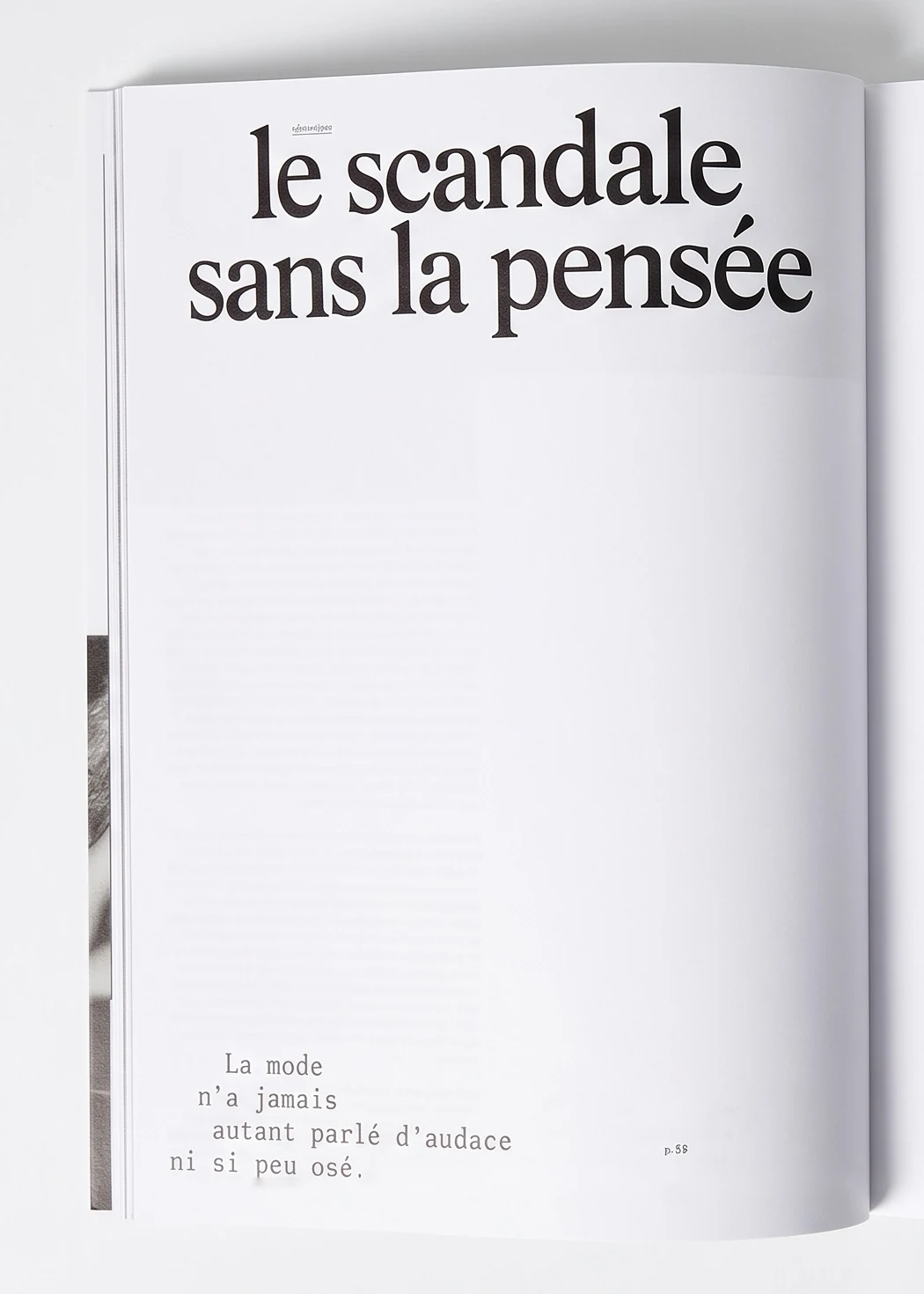
magazine magazine, no. 26, AW 26/27
Copywriting
I write manifestos, brand platforms, taglines, tone of voice and wording. The story comes before the campaign, because it gives the images a reason to exist and the house a language of its own.
Editorial
Shaping an issue, choosing the contributors, holding the line from flatplan to final sign-off. I led issues as VP and Creative Officer of A Magazine Curated By, edited Modelab, devised and curated panels, and wrote the cultural notes for the Institut Français de la Mode.